Get Your Feet Wet
Helen Metella - 1 December 2025
Experiential learning lets students close the gap between legal theory and ‘the messiness of the world’.
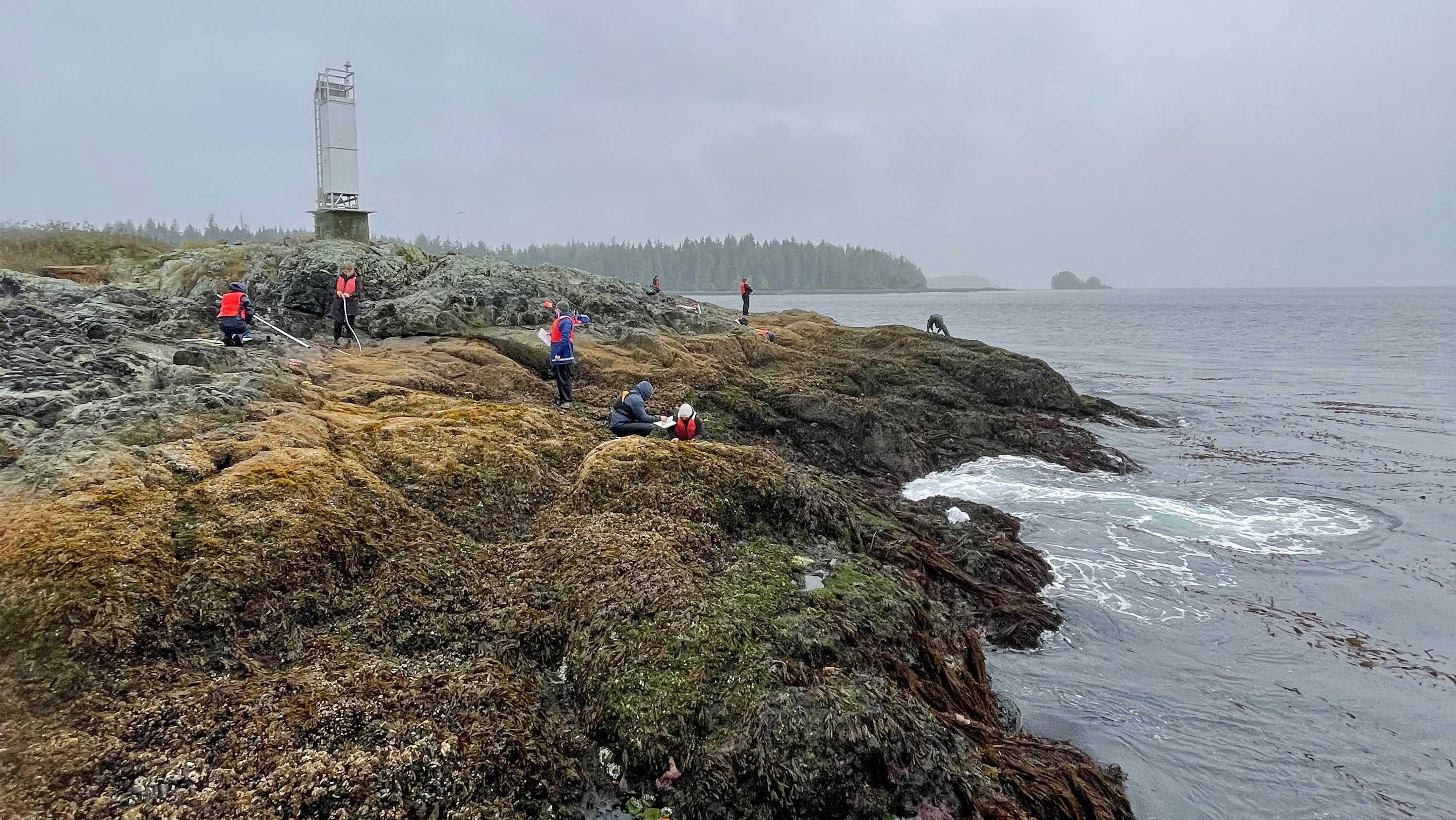
A group of University of Alberta law students were hiking in Pacific Rim National Park on Vancouver Island in May 2024 when they paused at a remote beach for a lecture from their professor.
For 90 minutes, the students learned about the history of whaling on the West Coast, the failure of international law to regulate whaling, the local and sustainable use of whales in Indigenous whaling and all the associated tensions. For the duration of the lecture — while the group was inhaling sea air and absorbing information — a grey whale and her calf were feeding about eight metres from shore. The sea mammals are members of a species that from 2018 to 2020 suffered unusually high mortality caused by vessel strikes and fishing gear entanglements.
“We had the subject matter right there with us,” says Cameron Jefferies, ’09 LLB, the Faculty of Law professor who was delivering the seaside lecture and had developed the U of A’s Oceans Law and Policy course. The course is hosted by the Bamfield Marine Sciences Centre, a teaching and research facility on the west coast of Vancouver Island dedicated to coastal marine sciences education and research.
“We had a recovering species and a success story, and I think we had an experience that all of those students and I will have for the rest of our lives.”
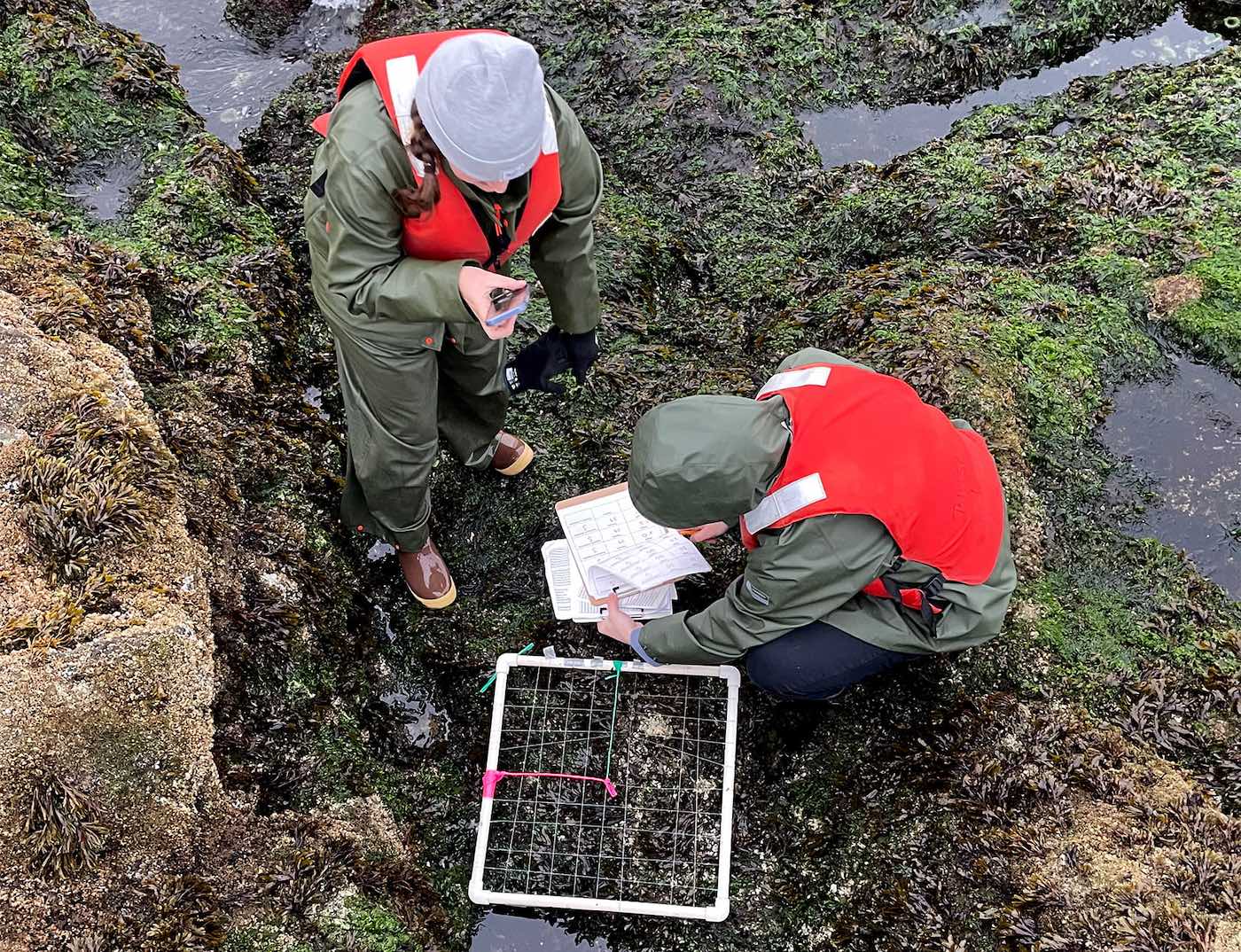
It was a thoroughly immersive event, illustrating legal disputes about the ocean, within seeing and smelling distance of the beings most affected. It was a vivid example of how experiential learning helps U of A law students make the leap from memorizing legal rules to applying them, long before they have to earn their keep as lawyers. It’s the kind of experience that benefits not only the students but the profession and the public too.
Sometimes called “hands-on” learning, the Faculty of Law’s experiential learning exists in an array of formats.
Oceans Law and Policy is a place-based course that helps students connect with the natural world and link it to laws that may feel distant and abstract, says Jefferies, who is also the associate dean of education in the faculty.
Many people think of law as something that is drafted in boardrooms or in legislatures and adjudicated in rigid environments in front of judges, far removed from the natural experiences of life, Jefferies says. “I think this course, with its focus on place-based learning, can close that gap.”
Oceans Law and Policy — the only applied course on the subject in a Canadian law school — begins with a week of classroom learning about who is responsible for regulating which marine spaces and activities in the oceans and why. Then, over six days at the marine sciences centre, students spend 12-hour days on the ocean and in the forest, and learning about such locations as Kiixin, a 5,000-year-old archeological site.
Students might participate in a licensed ocean dredge, which pulls up a shallow layer of sediment, to observe life on the sea floor. Or they might learn about the legal history of the location, including the undersea telegraph cable network, completed from Bamfield to Australia in 1902, that carried important messages during the First World War. Discussions that follow could involve laws about endangered species, fishing rights, piracy, espionage or terrorism. Current events dictate Jefferies’ main themes each year. This year, the focus was on deep-seabed mining, prompted by the U.S. president’s recent executive order to deregulate it.
In the Messiness of Real Life

Other experiential learning opportunities bridge a different gap, says Allison Fieldberg, ’12 PhD, the experiential learning lead at the faculty. These include the performance-under-pressure environments of mooting, and providing entrepreneurs one-on-one assistance in free legal clinics. Both are examples of learning-by-doing. In addition to widening students’ knowledge and research skills, they learn how legal solutions are applied in what Fieldberg calls “the messiness of the real world.”
Fieldberg says that students often struggle with the transition from text-based skills — such as analyzing the law, writing case summaries and researching jurisprudence — to helping a real person sitting in front of them, expecting problem-solving, advice and professional empathy.
“Traditionally, law schools have not really taught that piece,” Fieldberg says. “When I went to law school in the late ‘90s, there weren’t many opportunities to support actual clients.”
For articling students, the learning curve is steep and the runway to it can be short. If students arrive already comfortable with some aspects of legal practice, it boosts their confidence, Fieldberg says. “Experiential learning in law school just gives you a head start.”
Give Trial a Try
Oceans Law and Policy is open to 23 students a year. But other experiential learning opportunities are widespread in the faculty. Mandatory and competitive mooting involves hundreds of law students every year.
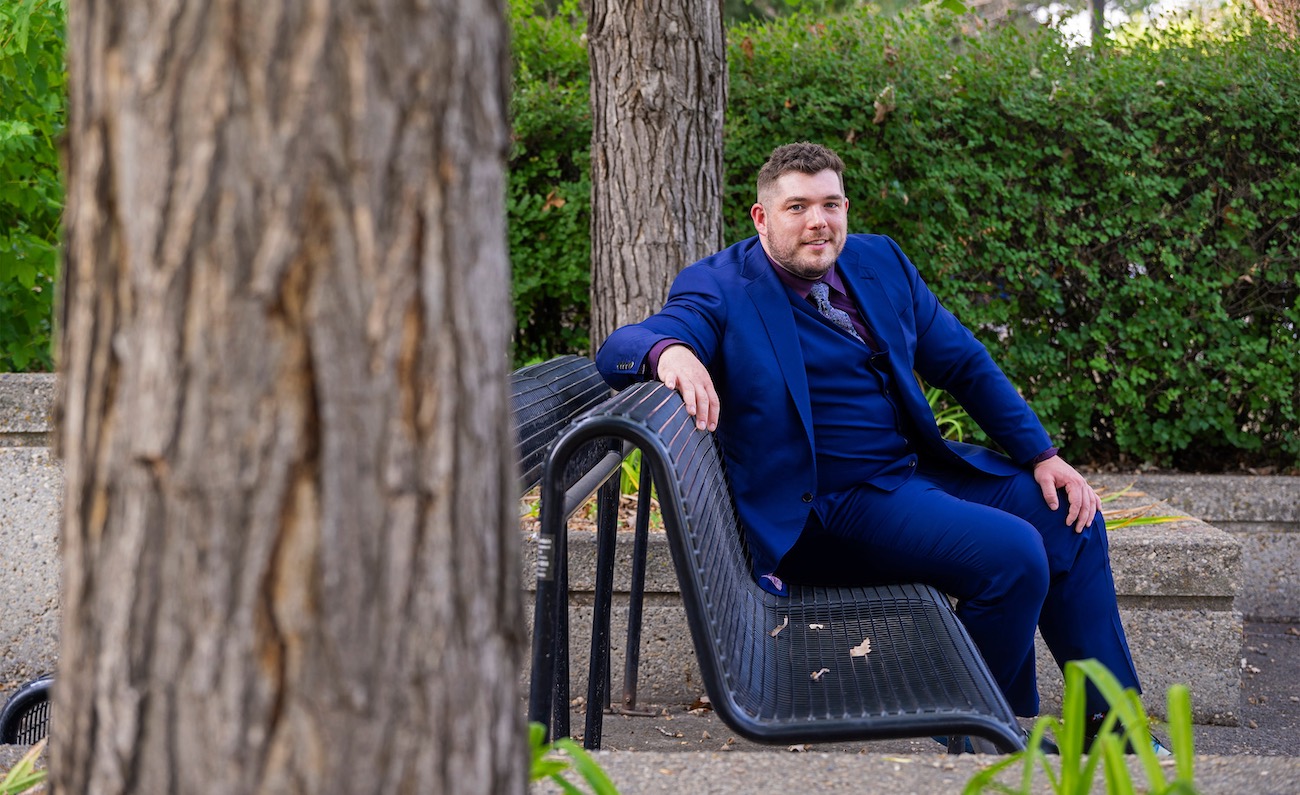
Like every first-year student, Dustin Edwards, ’25 JD, participated in the mandatory moot as part of a course called Legal Research and Writing. “That first experience had me hooked on mooting,” Edwards says.
That positive experience led to Edwards and his moot partner being selected to compete in the Right Honourable Beverley McLachlin Moot competition for 1Ls. In addition, Edwards was selected to compete on two of U of A’s national moot teams: the Gale Cup and the Canadian Client Consultation Moot.
Edwards proved to himself that he was indeed assembling genuine skills as he was preparing for and participating in those moots, which students complete in the for-credit Moot Court Competition course. “You can actually notice your own development as you go through, which I don’t think you always get when you do a three-year degree,” says Edwards, who has a bachelor of science in biology and a master’s in educational policy. “You don’t always get to see that improvement.”
The Gale Cup is an appellate-level criminal law moot in which teams of four (two for the appellant side, two for the respondent) from Canadian law schools argue a recent Supreme Court of Canada case. To prepare, U of A’s teams do eight practice moots, each before a three-person panel drawn from local judges, lawyers and law professors. At the competition, they argue before judges from lower courts and courts of appeal. In the final round, a Supreme Court justice presides.
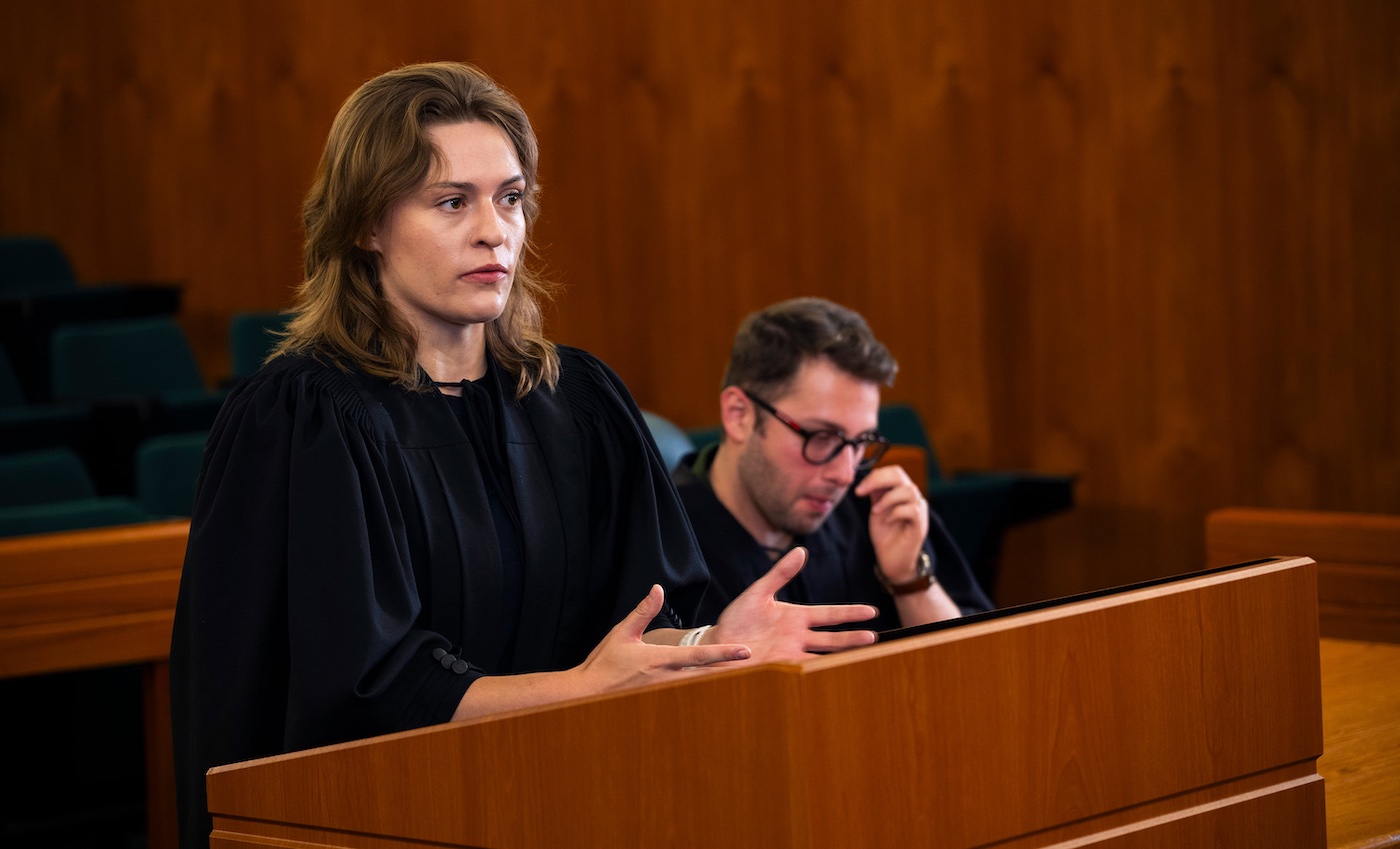
The process includes writing factums, making oral submissions, answering panel questions on the fly, then (at least in Edwards’ case) switching position from respondent to appellant just an hour before the finals. It built his confidence, Edwards says. Appearing before so many elite legal practitioners planted something even more unshakable: an impressive network.
“I’m the first person in my family who’s ever had a university degree, let alone a law degree,” he says. “So I didn’t know anybody coming into this. It’s just an incredible opportunity to get to know people you don’t often get access to in the early stages of your career.”
Having esteemed contacts to consult is certainly gold, but successful lawyers still require bedrock client-facing skills. Edwards began honing those during the Canadian Client Consultation Moot Competition. It simulates introductory meetings at a law firm between a lawyer and a new client.
Teams are told in advance the general area of law where the client’s problems lie so they can research it. A day prior, the teams receive a memo briefly describing why their client, played by an actor, is coming in. During 45-minute meetings with four different clients, the students must explain all their professional responsibilities to each client, take notes on the problem, summarize it, provide a legal analysis, lay out legal options, build rapport but maintain professional distance and then ask if the client wants to retain them. A panel of lawyers observes the meetings to assess the students’ prowess.
Edwards and his partners took third place in both moot competitions, but the big win, he says, is knowing he can handle similar situations once he’s a working lawyer because it won’t be his first time facing them. “I’ve already gone through the stress,” Edwards says.
When students enter the profession with preparatory knowledge from experiential learning, Fieldberg says, it takes some pressure off working lawyers, who must assume the next phase of training students: overseeing articling.
On the other side of the desk, students are not the only beneficiaries of mooting and other experiential learning. It’s also a boon to practising lawyers to be involved, says Faith Majekolagbe, an assistant professor who developed the U of A’s Entrepreneurial Law course and its sister component, the Entrepreneurial Law Clinic.

Lawyers practising in such areas as corporate, commercial or intellectual property law may not see many avenues where they can give back to the community in ways that align with their interests, she says. The Entrepreneurial Law Clinic, where students offer numerous practical services to startups, small businesses and non-profits, “gives them that opportunity to do so.”
The course has four modules. In the first, students learn about the differences between business and non-profit entities. In the second, they study financing issues, including how the law intersects with non-traditional methods like crowdfunding. In the third module, they’re educated in considerations that entrepreneurs encounter before and after their businesses are up and running. These include hiring, privacy policies, consumer contracts and competition. The last module covers intangible property and intellectual property strategy.
For the clinic portion, which is virtual, students work in groups of two or three on several case files for 80 hours a term. In addition to helping clients prepare documents and find pertinent legal information, they learn how to take on clients, ask the right questions to diagnose a client’s legal issue, and manage clients, files and their own time.
While mooting provides practice for future lawyers, the Entrepreneurial Law Clinic benefits actual clients who need legal help, too. The course offers people access to legal knowledge and services that are otherwise out of reach for many, says Majekolagbe.
“When people think about businesses and entrepreneurship, they might think about rich people with plenty of money,” she says. “But most people don’t go into entrepreneurship like that. It’s a means of survival for most people.” In fact, some of the clinic’s clients are new immigrants anxious to provide for their families by running a small enterprise.
“We have people who are maybe nurses in their own country, for example, who can’t immediately work in Canada but have learned a craft and want to go into a craft-making business while waiting to certify in their profession.”
The Common Elements
While the faculty’s experiential learning opportunities are disparate in content, they all share key elements. Students are immersed in what happens in the real world. They are closely supervised by professors and working practitioners. And — here’s the biggie — each experiential learning course requires students to reflect on their learning goals and how they were achieved through the experience.
“It could be a piece of writing, a discussion or some sort of case memo, but essentially it’s how they’ve connected the complex reality of the experience to what they’ve learned of the legal theories in that area,” says Fieldberg.

That reflection can lead to unexpected new paths of learning. For the Oceans Law and Policy course, Jefferies has read papers on law and policy related to specific local marine species, multi-jurisdictional ocean governance and historical analyses of the tradition of lifeboats and coast guard services — topics not necessarily covered in his course but sparked by it.
As well, says Fieldberg, at their core, all experiential learning courses help develop “the whole lawyer,” a contemporary term for practitioners who have a strong grasp of case law, legislation and jurisprudence as well as the ability to apply that knowledge to complicated, evolving issues while anticipating ramifications.
Opportunities like place-based courses, mooting and the Entrepreneurial Law Clinic are made possible through the generosity of donors. Amplifying student success through experiential learning is at the heart of the U of A’s Shape the Future campaign, which helps ensure students have the resources, experiences and physical spaces they need to thrive in law school and beyond.
In the study of law, experiential learning is “more than just applying legal rules and legislation,” Fieldberg says. “It’s the ability to think in complex ways and synthesize various disciplines, including sociology, health care or intellectual property, within the application of black-letter law.”
For Edwards, the mooter, experiential learning prepared him for something all-encompassing. During 2L, he had a health setback that could have rattled the progress of someone less prepared. But taking the stairs in downtown Toronto to Osgoode Hall, which houses the Ontario Court of Appeal and is the site of the Gale Cup moot competition final rounds, he was pretty calm. He was aware he was about to argue before a Supreme Court justice, but he says that “walking up and taking that deep breath and knowing no matter what, I have this, I know I can do this — that moment is solidified in my brain.”