India Study Tour
Maya Arun - 12 March 2026
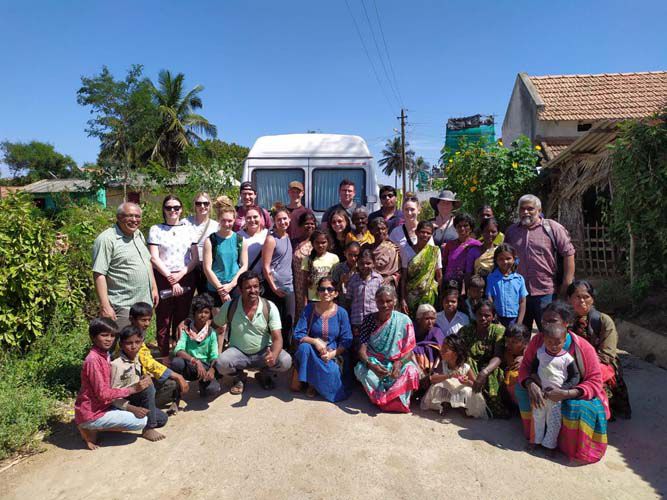
Students, instructors and community members
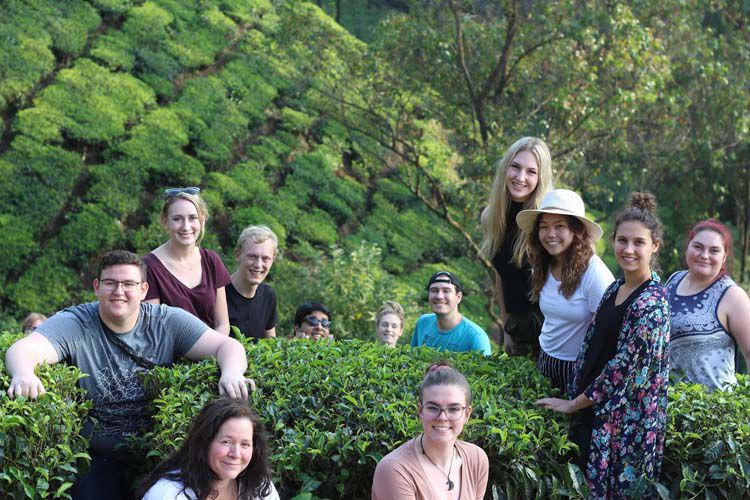
Tea plantations in the mountains of southern India
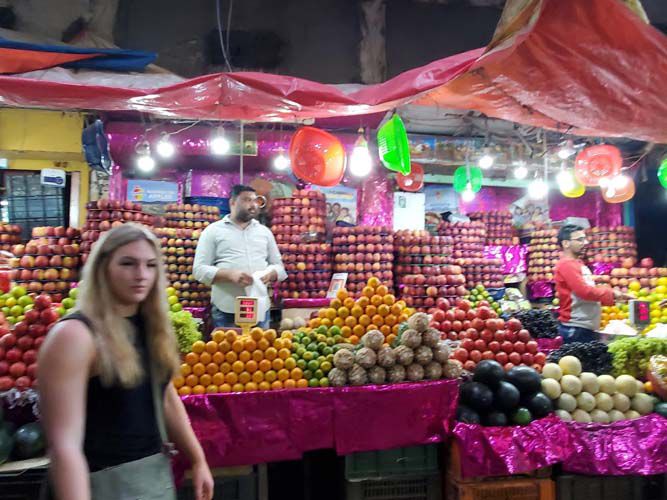
Fresh food market in India
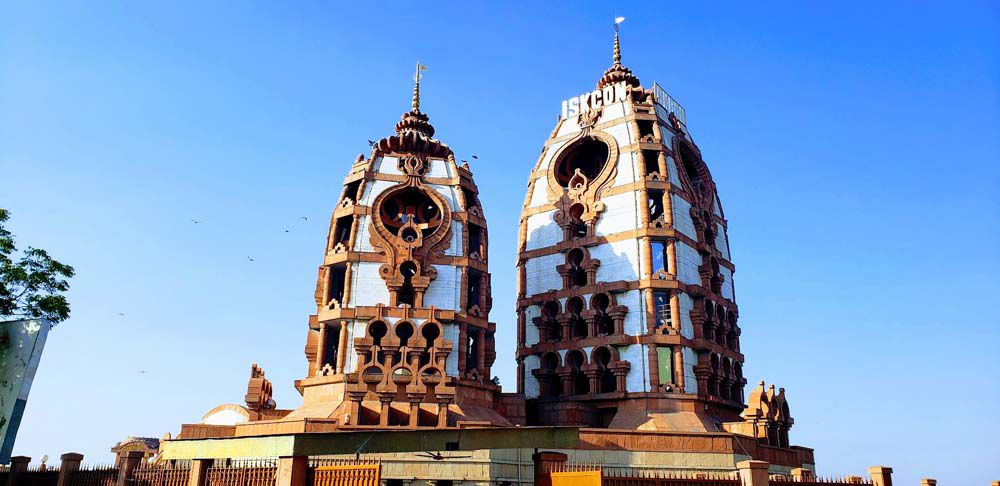
ISKCON Temple in New Delhi
![Professor Manaloor [far right] with students](../../../../../media-library/goabroad/images/photo-13.jpg)
Tea plantations in the mountains of southern India
The U of A offers over 240 programs in more than 50 countries, giving students the opportunity to learn abroad in various ways. The faculty-led programs are especially unique —many focus on experiential learning, such as the India Study Tour. Designed by Dr. Varghese Manaloor and Dr. Jack Waschenfelder, the three-week study tour focuses on sustainable development practices from social, cultural, religious, and economic perspectives.
Professor Manaloor is an associate professor at Augustana, where he primarily teaches economics. He is originally from Kerala in southern India, but grew up in northern India before he eventually moved to the University of Saskatchewan to complete his PhD.
“That culture shock was there for me when I moved from India to Saskatoon — the stark difference in the density of the population.”
Professor Manaloor’s experience extends beyond fluency in multiple Indian languages and an intimate understanding of the nation’s diversity. He travelled around India as part of excursions during his undergraduate degree, and when he became an assistant professor, he also led a course to the country’s south.
It was this early interest in experiential learning that laid the groundwork for the India Study Tour. First offered in 2000, the four-credit course was envisioned after now-retired Professor Waschenfelder (religious studies and philosophy) returned to Augustana after a sabbatical in India, fascinated with Hinduism and Indian culture. The Camrose campus, with its emphasis on experiential learning, provided the perfect platform to let students engage in something like a study tour abroad. The course is based on the perspectives of two economics and religious studies professors, focusing on institutions (many of which are religious) and their impact on developmental work in India.
Although the actual tour takes place in the Spring Term, the preparation for the course begins in the Winter Term. Students meet periodically over the semester to get to know and understand culture in India, its economic development challenges, logistical preparation, and getting to know one another. When in India, students have to complete mini-assignments, reflective journals, a presentation on a relevant research topic, an oral exam, and a self-evaluation.
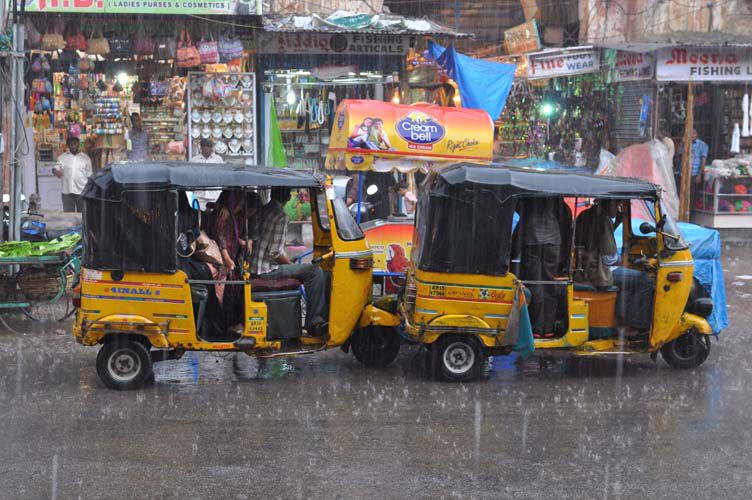
The tour route usually explores parts of northern and southern India, with some trips in the past venturing east and west. In 2023, Dr. Manaloor and his students travelled to Delhi, Varanasi, and Agra in the north, and Bangalore, Kochi, Chennai, Kanchipuram, and Mahabalipuram in the south. Both cities and rural areas are visited, with an emphasis on the latter. Long hours spent on buses and trains mean that everyone gets to know each other. From crowded markets and roads in cities to tea plantations and rides on houseboats.
Professor Manaloor finds that hosting students from different disciplines lends different perspectives to the collective experience abroad.
“I have had art students who are fascinated with the paintings and the architecture in temples, students who were fascinated by different alternative medicines. I have had students who have gone on to become lawyers, and some who work with NGOs.”
Students learned about economics not just through the developmental impact of the institutions they visited, but also through an everyday quintessential Indian practice: bargaining. Despite the obvious language barrier, students tend to pick up the art of bartering relatively quickly, according to Professor Manaloor. Sellers, already familiar with foreigners, are equipped with phones and calculators into which they punch in a price. A shake of the head and some signalling is all it truly takes to negotiate.
The tour cultivates more than just knowledge about the country’s culture and economic climate. The experience provides students with an opportunity to get out of their comfort zone, learn how to communicate without knowing the language, and see India while in a safe environment. Although for Professor Manaloor, the tour requires much preparation, it is ultimately a rewarding experience to watch students learn about and appreciate a place so different from their own.
“Take this course if you enjoy travel and want to experience challenges in being in a country that is very different from where you are living or very different from what you have experienced so far.”